Overview
BodyByEr is a personal training business built largely through Instagram referrals. While Erin’s social presence generated strong interest, her website failed to convert visitors into clients. Users, particularly older adults and first-time gym-goers, were dropping off before taking action.The site functioned more like a static marketing page than a conversion tool.
The Challenge
Failure to convert website visitors into clients
Visitors lacked the confidence and clarity needed to book. This friction resulted in abandoned sessions, time-consuming manual follow-ups, and lost revenue.
No pricing transparency
Without visible pricing or availability, users faced uncertainty at the moment they were ready to commit.
Information overload
Long paragraphs and unclear page structure increased cognitive load, particularly for older users.
No visible availability or booking flow
Interested users had to send Instagram DMs to inquire.
Goal
Transform the website from an informational page into a clear, trustworthy path to booking a training session.
Research
Understanding how people choose and trust a personal trainer
To understand booking behavior, I conducted 6 user interviews with individuals who had previously worked with personal trainers.The goal was to uncover:
Key Insights
Transparency builds trust
Missing pricing or unclear next steps was interpreted as a red flag.
The website is a service
Users judged professionalism based on the digital experience.
Social proof drives confidence
Users look for human proof: testimonials, stories, before/after photos, to help them imagine success.
Design Strategy
Designing for confidence, not guesswork
The redesign focused on helping users answer three key questions quickly:
Can I trust this trainer?
How do I book right now?
How much does it cost?
To support these decisions, the design prioritized:
1
Clear information hierarchy
2
Reduced cognitive load
3
Access to pricing and booking
Design Execution
Simplifying the decision journey
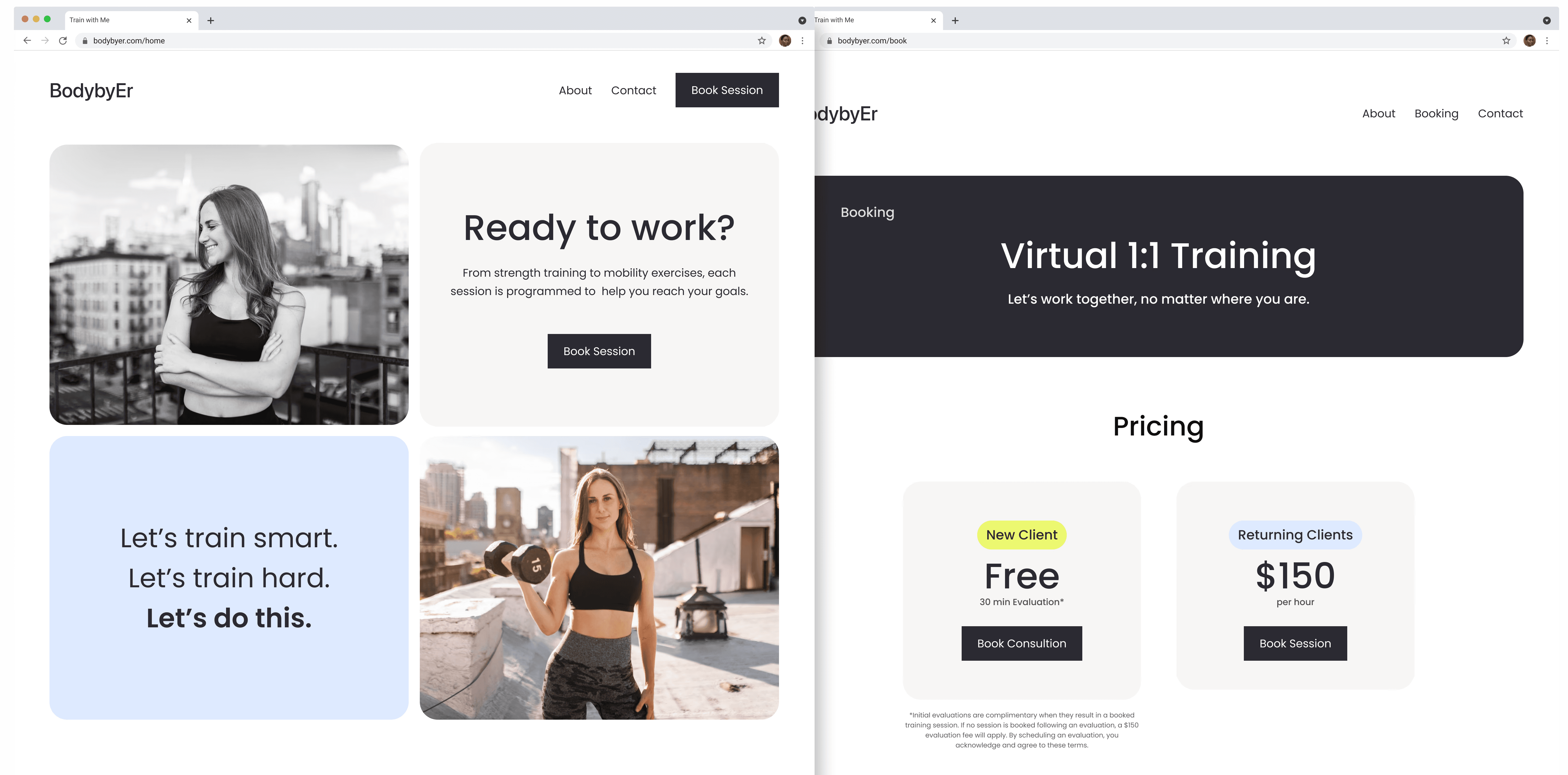
Content was broken down into purpose-driven pages (see below) to improve findability.
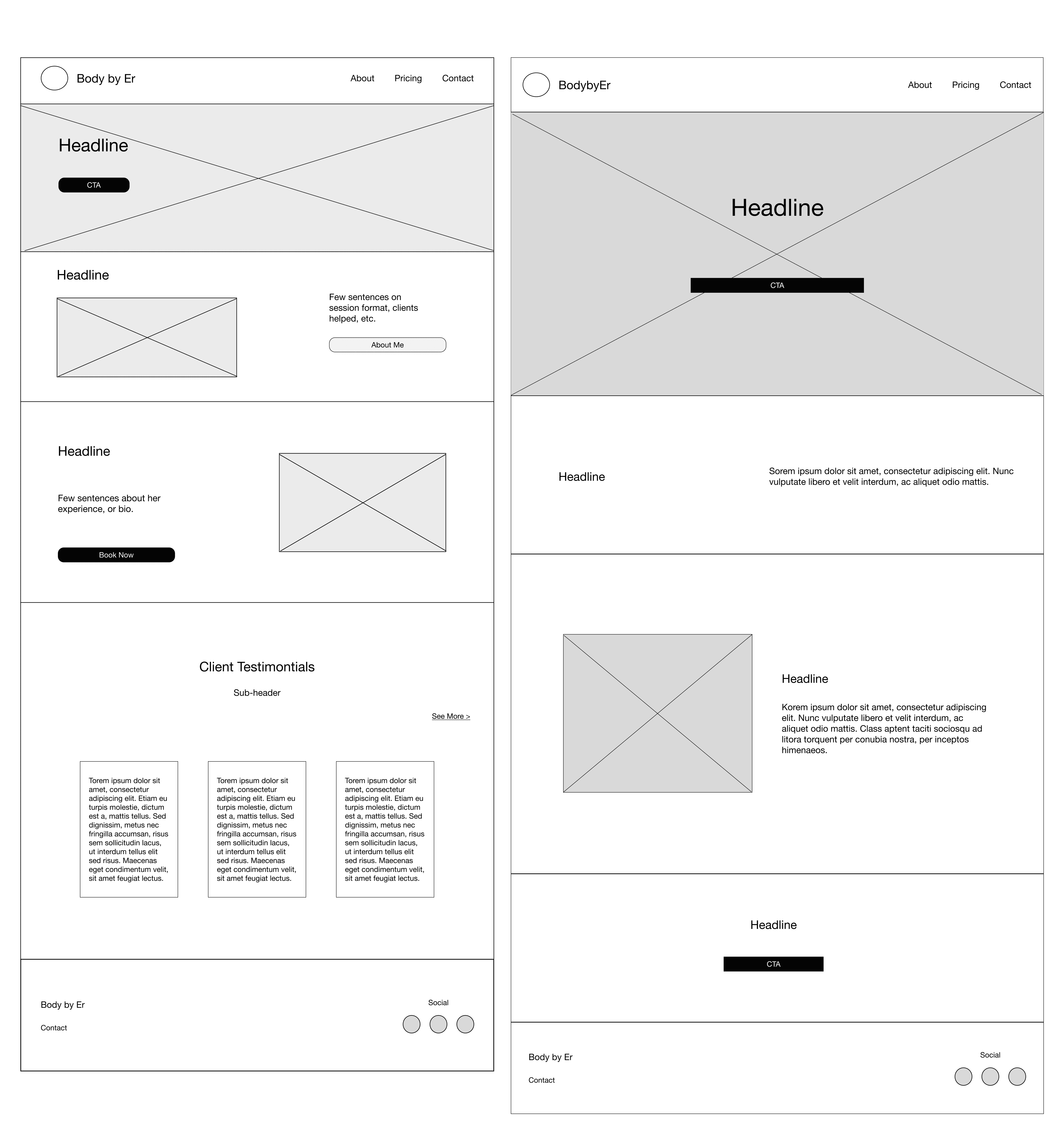
Variations of the Home Page
Different versions of a homepage to compare how to best break up dense text in the original site, add images for easier readability, and present value proposition.
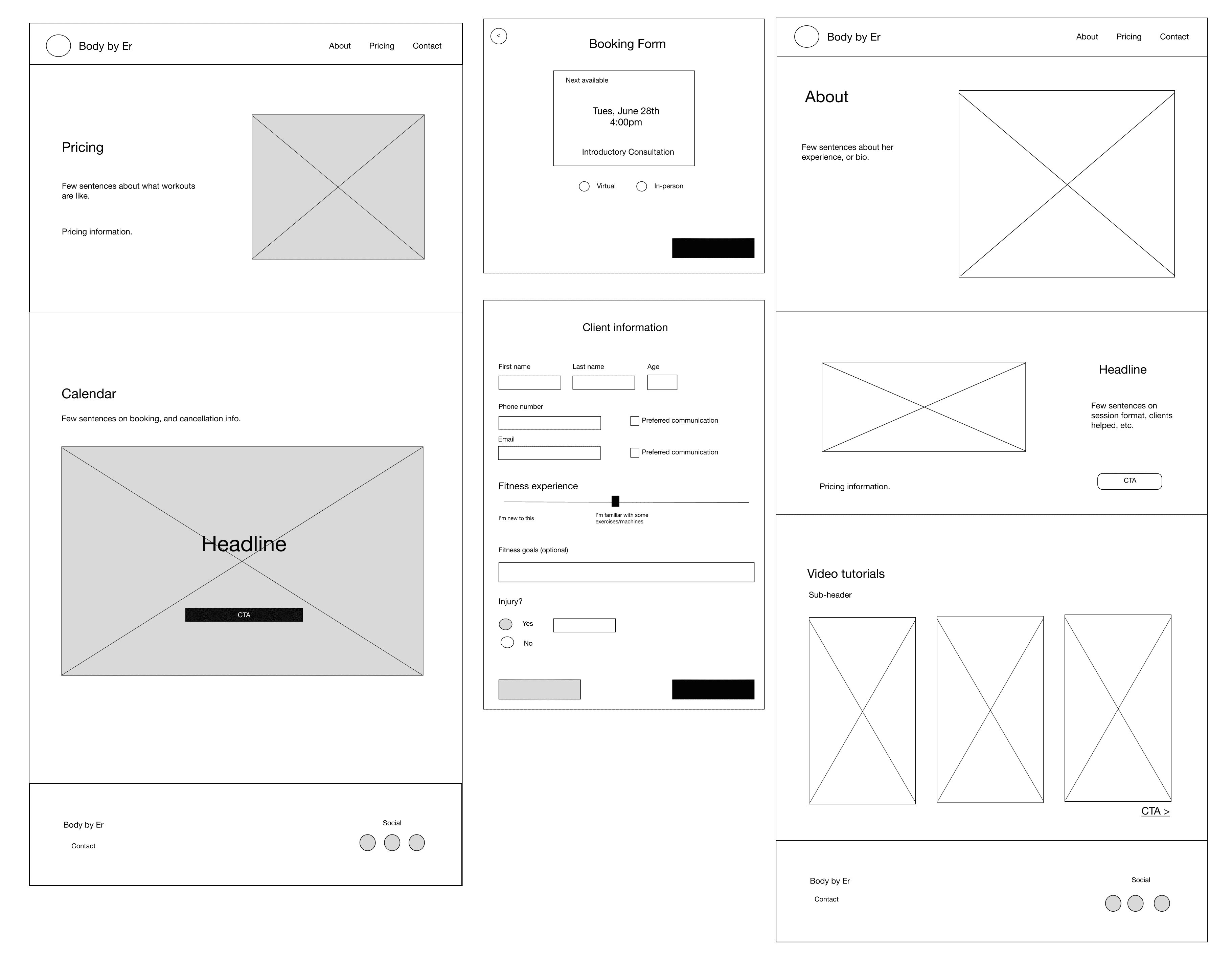
Pricing Page, Booking Feature, & Contact Page
To provide transparent service pricing, promote self-serve scheduling, and offer a secondary support channel for questions or concerns.
Design Execution
Key UX Improvements
After reviewing competitor booking flows, I identified patterns that reduced friction and used these insights to restructure the site around user intent.
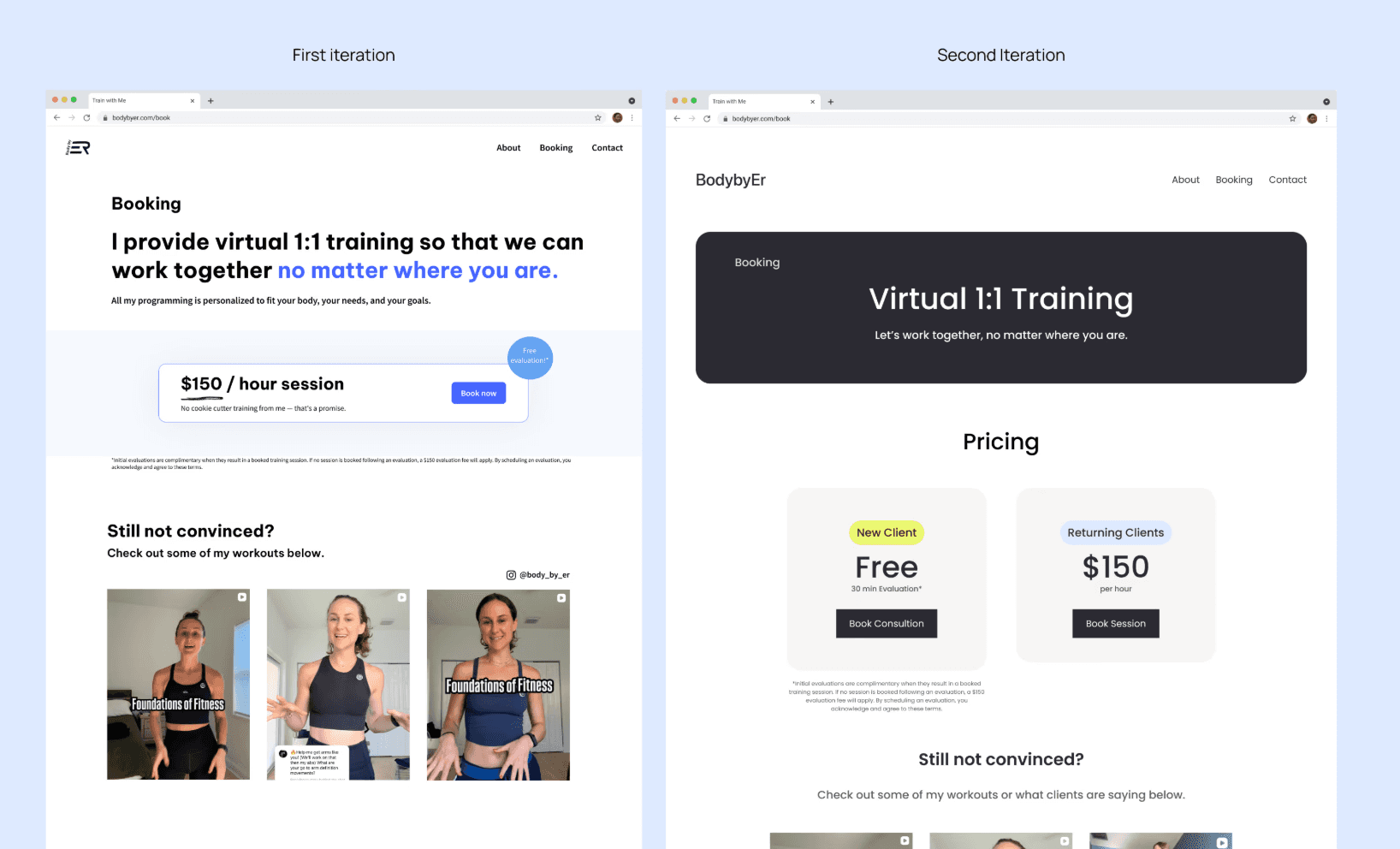
Unfront Pricing
Transparency was especially important to users interviewed during the research phase. Therefore, prices are listed on a dedicated 'Booking' page, as well as on the Home page.
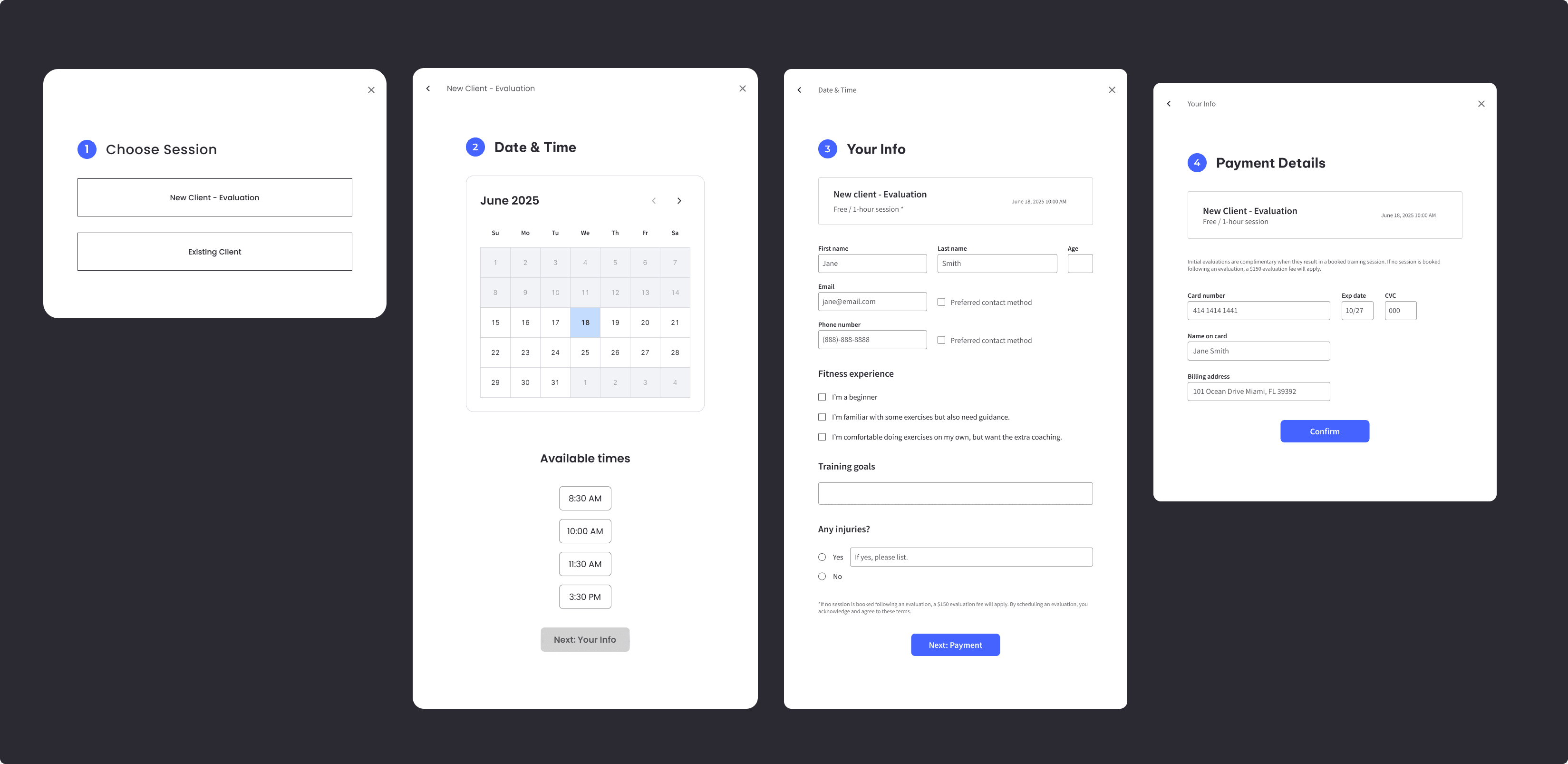
Self-Serve Booking
A native booking form allows users to schedule sessions directly through the website. This eliminated the need for Instagram DMs and manual scheduling.
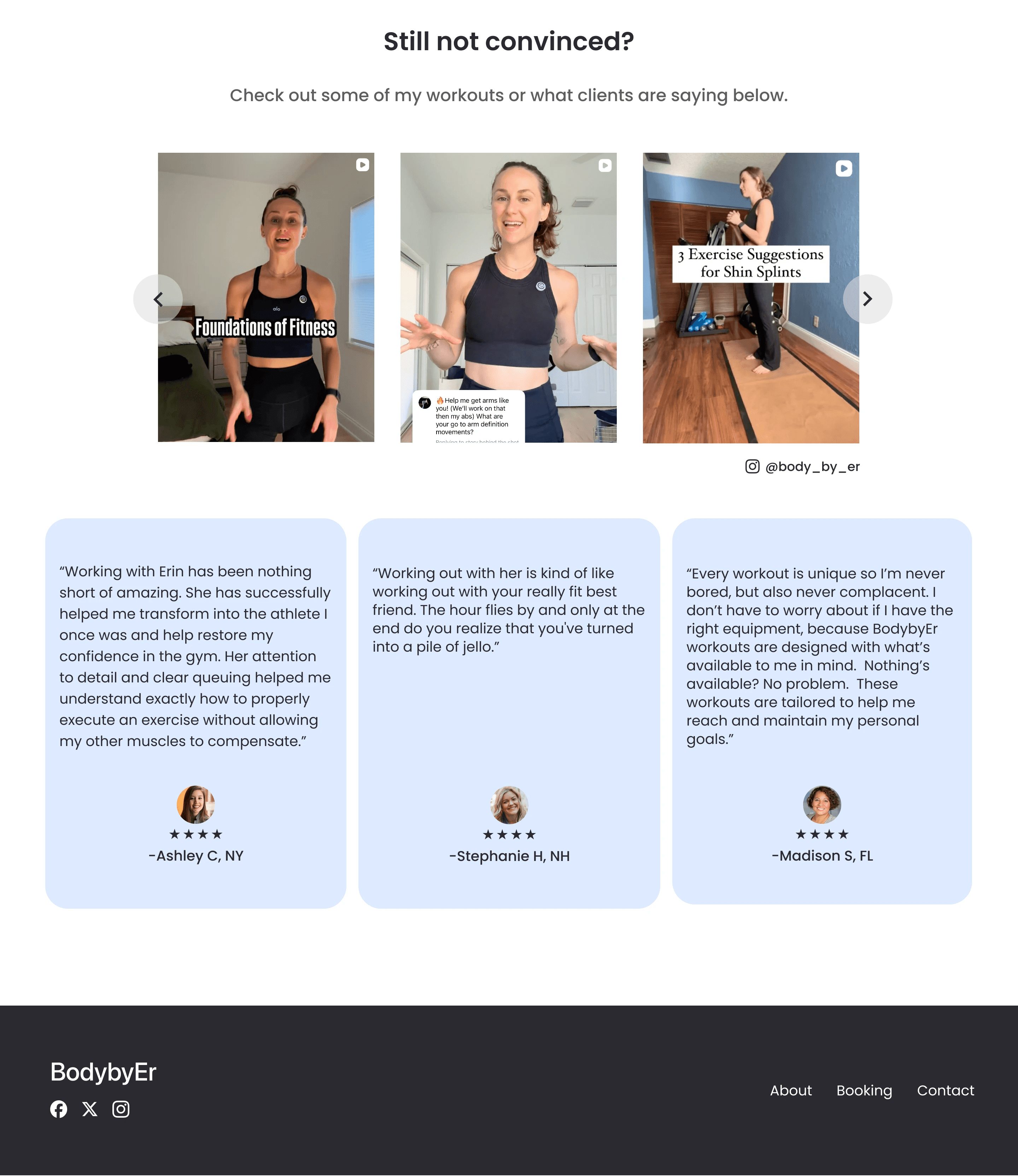
Distributed Social Proof
Testimonials were shortened and strategically placed across high-intent pages (Home and Booking). This reinforced credibility at decision moments.
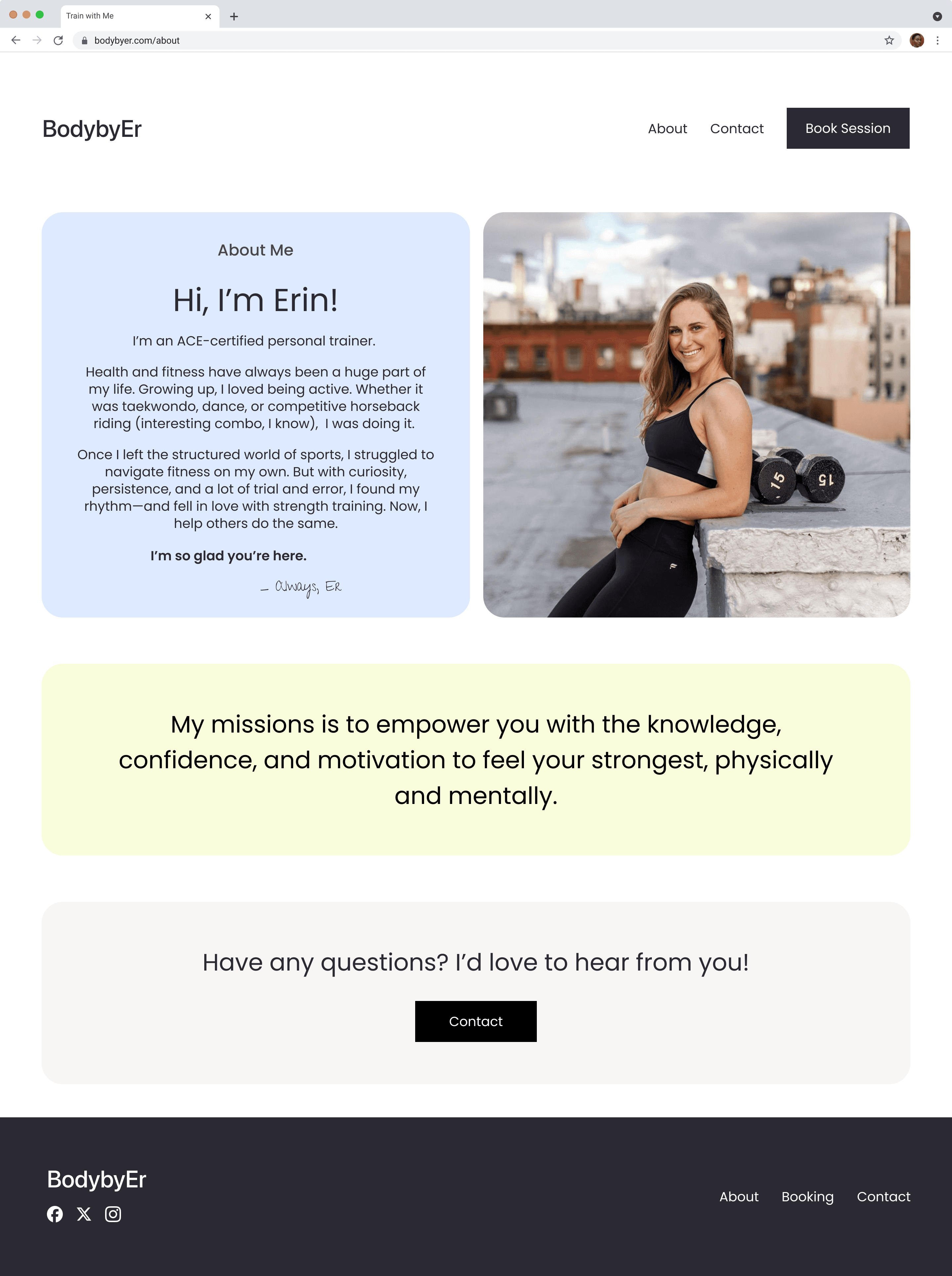
Improved Readability
The original site relied heavily on dense paragraphs. The redesign introduced: clearer typographic hierarchy, shorter sections, improved spacing, and scannability. This was especially important for older users, who were a key audience segment.
Usability Testing
Validating the new booking experience
I conducted task-based usability testing with 6 participants.
Participants were asked to:
Navigate to pricing
Locate the booking page
Submit the booking form
Most users completed the booking flow in under a few minutes, indicating low cognitive load.
Visual Refinement
Evolving the UI while preserving the validated UX
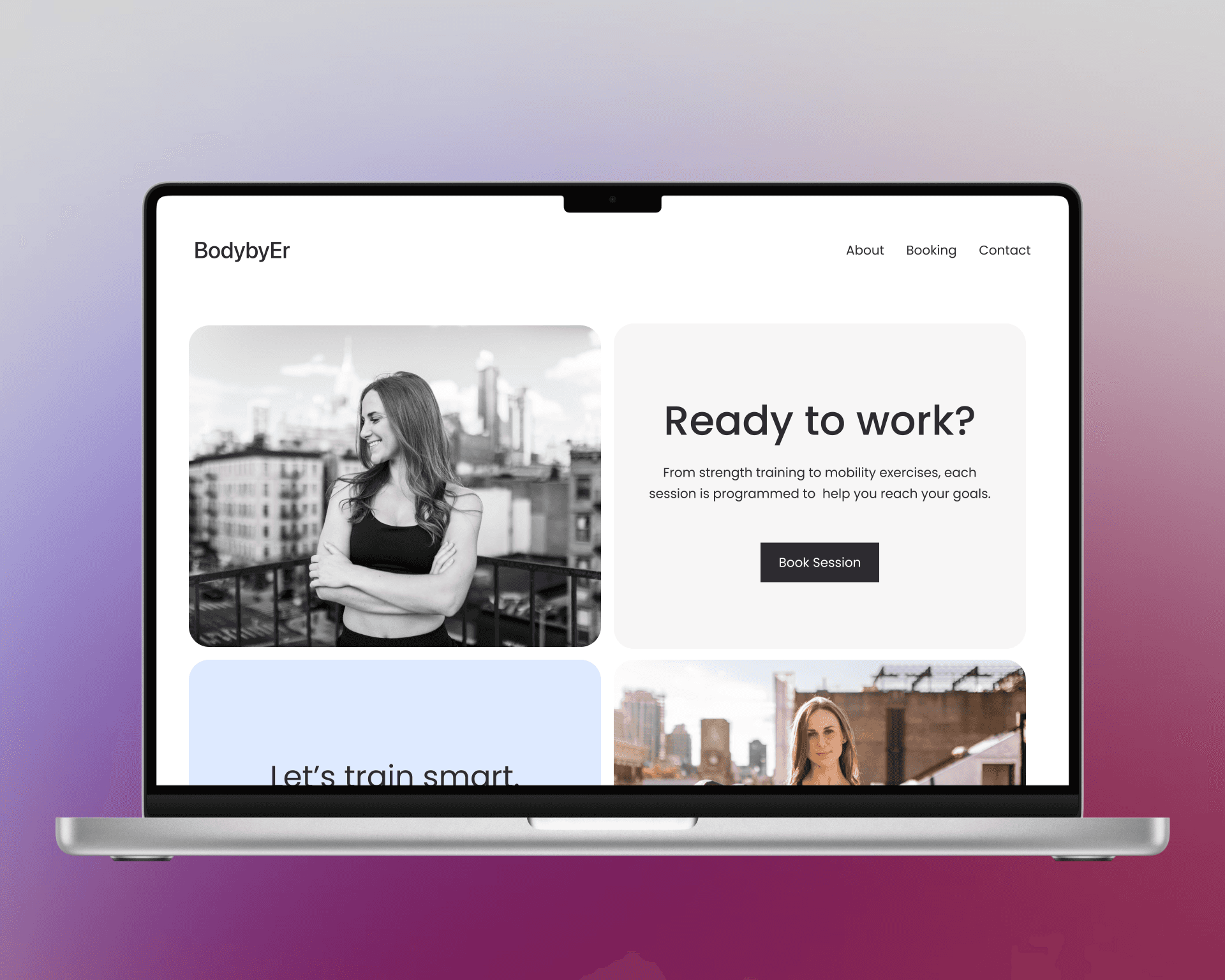
After further design refinement, the interface received a visual update while maintaining the successful UX structure. The goal was to elevate professionalism without losing Erin’s warmth.
Because usability testing validated the workflow, the underlying UX remained unchanged.
Key Refinements
Outcomes
Passive Marketing -> Conversion-Focused Booking Experience
The redesign transformed the site from a passive marketing page into a conversion-focused booking experience.
Key Improvements
Improved scannability
Reducing friction and effort for hesitant users new to fitness, or older adults who may struggle with navigating a content dense site.
Clear pricing
To set clear expectations and improve credibility
Immediate access to booking
The site now supports high-intent users ready to book, rather than redirecting them to off-platform conversations.
Stronger trust signals
With social proof, frictionless booking, and a sleek UI, the website's credibility increased
Reflections
Final Thoughts
This project strengthened my ability to quickly evaluate an existing experience and identify conversion blockers within real-world constraints.
The biggest takeaway was that small UX changes like clarifying pricing, surfacing availability, and simplifying navigation can dramatically reduce friction in high-intent moments.